Suche
Innenstationen/Indoor (6)
Stations-ID: D075
?? Work in Progress. English Translation coming soon!
 0
0
 0
0
Schreibe einen Kommentar
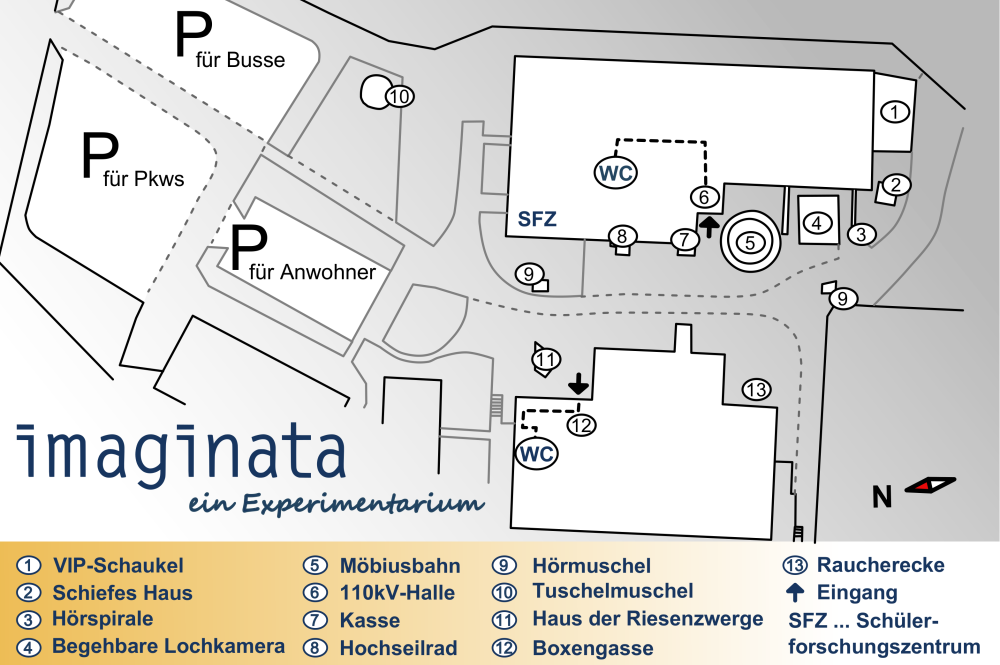
Stations-ID: D076
?? English instruction:
Take the Mirror ears, hold them to your ears and walk through the room.
Hold your ears to the sphere shaped listening lamp.
What can you hear?
• Stand in the room. What do you hear?
• What do you hear when you hold your ear to the openings in the sphere?
• Do all spheres sound the same?
• What do you hear if you cup your hand over the ear?
Mehr dazu in unserem Stationenpark-Handbuch
Find out more in our Handbook
0
0
Schreibe einen Kommentar
Stations-ID: D079
?? English instruction:
Take a glove or a blue cloth.
Take hold of an aluminium bar with your thumb and index finger and move our hand slowly outward, varying pressure and speed as you go.
- Where can you generate a tone easily?
- What are the differences between the tones produced by the different bars?
- Listen along the length of the top bar, where is the sound at it’s loudest?
- Touch a bar gently with the tip of your finger, while it is ringing. What do you feel?
What do you feel when you touch the the round top of a ringing bar?
This station was built by Dresden-based musician Jan Heinke. With the steel cellos and steel harps he has constructed, he has created a unique sound which can hardly be compared to the sound of classical instruments.
Mehr dazu in unserem Stationenpark-Handbuch
Find out more in our Handbook
2
0
Schreibe einen Kommentar
Stations-ID: D074
?? English instruction:
Hold both ends of the tube to your ears. What do you hear if you speak or sing?
Ask a partner to scratch or knock on the tube.
- What do you hear when you hold both ends of the tube to your ears? What do you hear when you hold one end of the pipe to one ear?
- Can you hear if your partner is knocking on the left or right side of the tube?
Mehr dazu in unserem Stationenpark-Handbuch
Find out more in our Handbook
0
0
Schreibe einen Kommentar
Stations-ID: D088
?? English instruction:
Put your head in one of the hollows of the humming stones and hum different tones to yourself: loud, quiet, high or low notes.
A partner can put his hand on your shoulder lightly during this experiment.
- What do you hear when humming in the hollow? What do you feel?
- Try different notes. Do they all sound the same?
- What does your partner feel when (s)he places his/her hand on your shoulder?
This experiment was designed by the educationalist, artist and carpenter Hugo Kükelhaus (1900-1984) for his ‘Experience Field for Developing the Senses’. He was inspired by stone age cult sites found on the island of Malta, he describes the effect of the experiment as follows: „The inner massage that is created in the head and reabsorbed by it signifies an unusually intense connection of the entire body from within.“
Mehr dazu in unserem Stationenpark-Handbuch
Find out more in our Handbook
2
0
Schreibe einen Kommentar
Bewerte uns!
Es hat dir bei uns gefallen? Du hast Kritik zu äußern? Wir freuen uns über jede faire Bewertung auf Google!




Schreibe einen Kommentar